
Monarchy as Political Idolatry
Common SenseThis flow traces Paine’s theme that monarchy elevates human rulers beyond their rightful place and obscures responsibility for political harm.
increasing Bearing strength in each event
 decreasing
Bearing strength in each eventdecreasingA Mortal Made Sacred
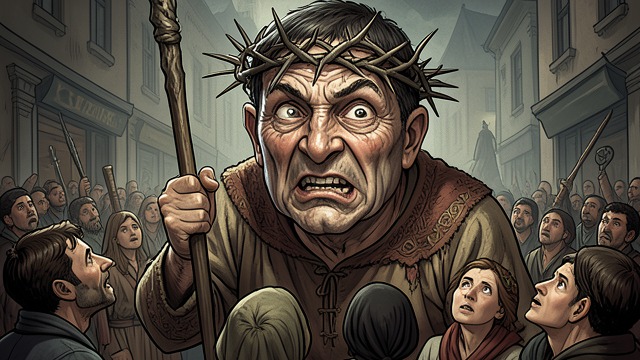
A Mortal Made Sacred
Majesty Questioned
Paine objects to language that describes kings as sacred while their bodies remain mortal. The title places political office under a reverence ordinary people cannot question.
Human Rank Enlarged
Monarchy creates an artificial distinction between one person and the rest. The elevation is political, but it is presented as if it were natural or divine.
Kings Receive Worship
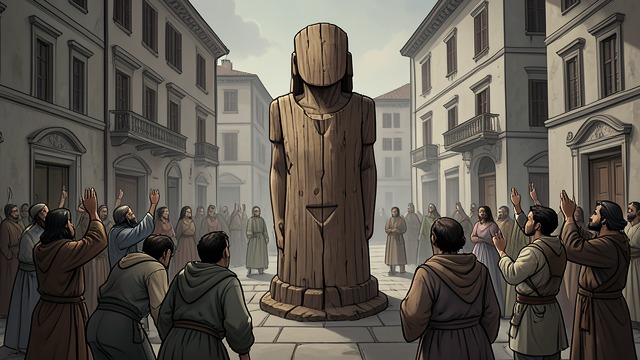
Kings Receive Worship
A Political Inheritance
Paine argues that customs of divine honor for rulers continue in altered forms. He treats reverence for living monarchs as a political habit borrowed from older forms of worship.
Idolatry Reconsidered
The problem is not faith itself but the elevation of human authority into an object of sacred devotion. Such reverence can shield rulers from moral judgment.
The King as an Idol
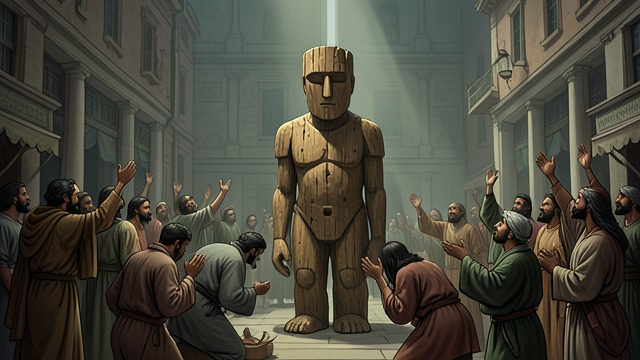
The King as an Idol
Rejection of Higher Rule
Paine reads the biblical request for a king as a rejection of divine authority. He argues that political subjects transfer reverence to a human ruler.
Allegiance Recast
The episode makes monarchy a spiritual as well as political question in Paine’s framework. The ruler’s authority rests on a claim that challenges a higher sovereignty.
Power Hides Its Makers
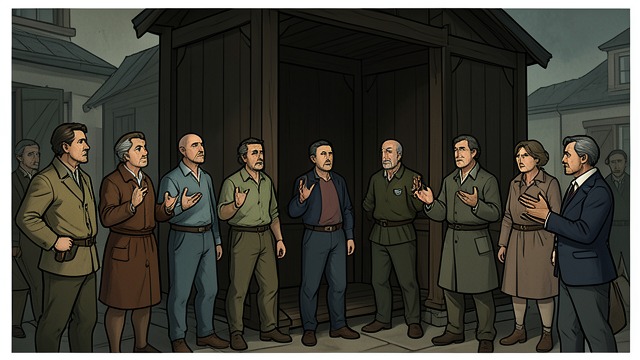
Power Hides Its Makers
The Crown’s Apparent Independence
Royal authority can seem to stand above the public, even though political institutions are created and maintained by people. This appearance obscures responsibility for power.
Subjects Sustain the System
Paine emphasizes that the people provide the means by which they may suffer. Recognizing their role makes political authority open to challenge.
Law Replaces the Idol
Law Replaces the Idol
Authority Without a Monarch
Paine’s formula makes law sovereign in a free country. It rejects the need to give one person sacred political status.
A Public Standard
Law is meant to govern rulers and citizens alike. The replacement converts reverence for a person into accountability to a shared rule.
At Paine’s opening attack on royal titles
During Paine’s comparison of ancient and Christian monarchy
As Paine interprets the people’s request for monarchy
During the critique of royal constitutional authority
At the proposed American ceremony
